
As the weather cools and the gardens wind down, I think about how to preserve the fresh flavor of my herbs. There’s something special about using plants I’ve grown myself, knowing they’re pure and free from preservatives. It’s a way to bring a bit of summer into every meal, even as the seasons change.
Over the years, I’ve experimented with different methods to maintain the quality of my herbs. Whether it’s for cooking, sauces, or simply enjoying the aroma, each technique has its own charm. From drying to freezing, I’ve discovered that the process can be both simple and rewarding.
In this guide, I’ll share practical tips and step-by-step advice to help you preserve your herbs effectively. Whether you’re a seasoned gardener or just starting out, these methods will help ensure your herbs stay flavorful and ready to use. Let’s dive in and explore the best ways to keep your garden’s bounty fresh all year round!
Key Takeaways
- Extend the fresh flavor of herbs as seasons change.
- Use methods without preservatives for pure, natural results.
- Explore drying, freezing, and other techniques for herb preservation.
- Enjoy the benefits of homegrown herbs over store-bought options.
- Follow practical, step-by-step advice for successful herb storage.
Introduction to Herb Preservation
There’s nothing quite like the satisfaction of having fresh herbs at my fingertips, no matter the season. Over the years, I’ve discovered that keeping my garden’s bounty vibrant and flavorful is both an art and a science. It’s a process that brings me joy and enhances my cooking in ways store-bought options simply can’t match.
Why I Love Preserving My Herbs
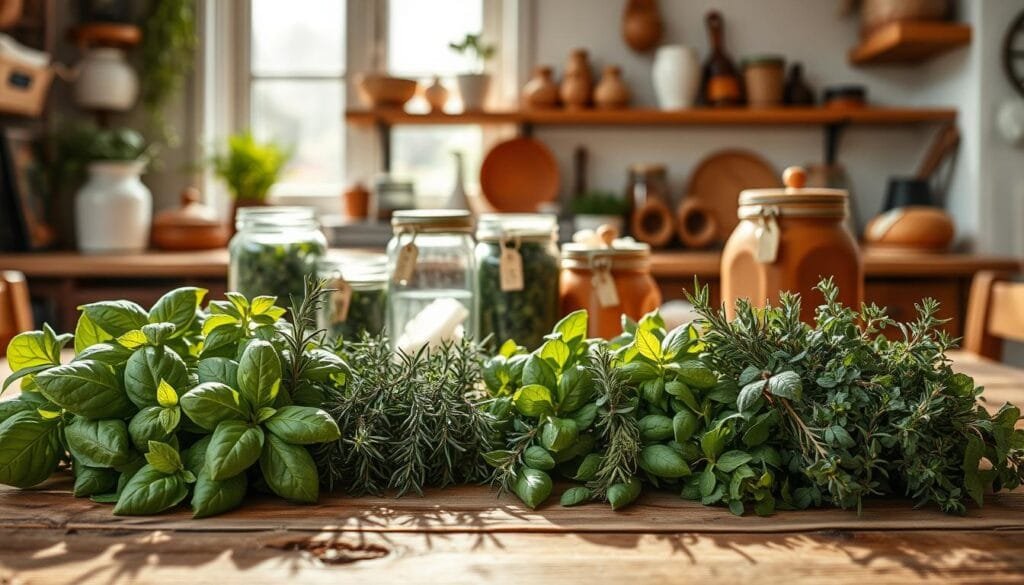
Preserving herbs is more than just a practical task—it’s a way to stay connected to my garden. I love the hands-on process of carefully selecting the best leaves, washing them thoroughly, and preparing them for storage. It’s a ritual that ensures I have high-quality ingredients ready for any dish.
One of my favorite parts is the aroma. Fresh herbs retain their essential oils, which means they bring a burst of flavor to every meal. Whether it’s a simple pasta sauce or a hearty soup, the difference is noticeable. Plus, knowing I’ve grown and preserved them myself adds an extra layer of satisfaction.
The Benefits of Keeping Herbs Fresh
Keeping herbs fresh isn’t just about flavor—it’s also about nutrition. Studies show that fresh herbs retain more vitamins and antioxidants compared to their dried counterparts. This makes them a healthier choice for my family’s meals.
Another benefit is versatility. From tender basil to sturdy rosemary, each herb has its own unique characteristics. By preserving them properly, I can enjoy their distinct flavors throughout the year. It’s a small effort that pays off in big ways, especially when I’m cooking with ingredients I’ve nurtured myself.
As we explore herb preservation methods, I’ll share the techniques that have worked best for me. Whether you’re a seasoned gardener or just starting out, these tips will help you maximize your garden’s bounty.
Understanding Preserving Herbs: Drying, Freezing, and Storing
When it comes to keeping my garden’s bounty fresh, I’ve found that choosing the right method makes all the difference. Each technique has its own strengths, and understanding them helps me decide which one to use. Whether I’m aiming for concentrated flavor or versatility, my chosen process ensures my plants stay vibrant and ready for any dish.

Comparing Drying and Freezing Techniques
Drying and freezing are the two main ways I preserve my plants. Drying concentrates the flavor, making it ideal for use in cooking and baking. I’ve noticed that dried leaves retain their essential oils, which enhances their taste in recipes like soups and stews.
On the other hand, freezing works best for tender varieties like basil or cilantro. While freezing can burst the cell structure, it keeps the leaves close to their fresh state. I often use frozen plants in cooked dishes where their texture isn’t as critical.
When and Why to Choose a Method
The method I choose depends on the type of plant and how I plan to use it. For hardy varieties like rosemary or thyme, drying is my go-to. These plants withstand the process well and retain their robust flavor over time.
For delicate leaves like parsley or mint, freezing is a better option. I’ve found that blanching them briefly in hot water before freezing helps retain their color and flavor. Storing them in freezer-grade bags with minimal air prevents freezer burn and keeps them fresh for months.
Both methods require careful handling, from washing to final packaging. Removing damaged leaves and ensuring they’re completely dry before storage are key steps I always follow. By choosing the right technique, I can enjoy the flavors of my garden all year round.
Tools That Make Herb Preserving Easier
You can preserve herbs with what you already own, but a few inexpensive tools make the job faster and the results last longer:- A food dehydrator — the most reliable way to dry herbs evenly at low temperature. See our full dehydrating guide, or browse food dehydrators.
- Airtight glass jars — mason jars or small spice jars keep dried herbs potent and protected from light and moisture.
- Silicone ice cube trays — perfect for freezing herbs in oil or water; covered trays keep freezer odors out.
- A vacuum sealer — for the longest shelf life, vacuum-seal dried herbs to lock out air. Here are the best vacuum sealers for food preservation.
- Herb scissors — multi-blade herb scissors make quick work of prepping a big harvest.
Drying Herbs: Techniques and Tips
One of my favorite ways to extend the life of my garden’s bounty is by drying my plants. This method not only preserves their flavor but also makes them easy to use in various dishes. Whether you’re a seasoned gardener or just starting, drying is a simple and rewarding process.
How I Prepare My Fresh Herb Garden
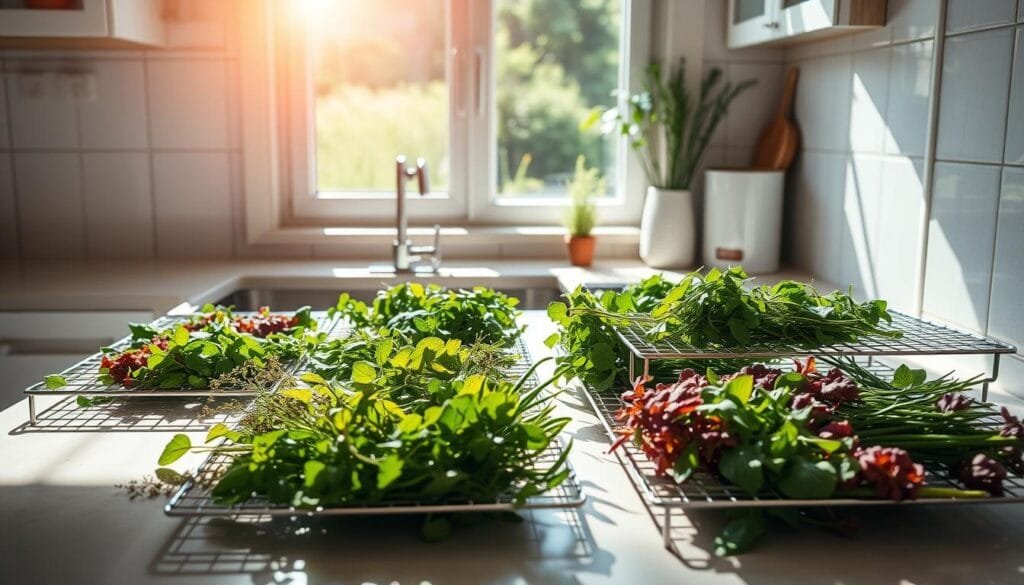
Before I begin drying, I carefully select the healthiest leaves from my garden. Damaged or discolored ones are discarded to ensure the best quality. I then wash them gently to remove any dirt or insects, patting them dry thoroughly. Excess water can slow down the drying process and affect the final result.
Once they’re clean, I lay them out in a single layer on a clean towel. This step is crucial for even drying. Overlapping the leaves can trap moisture, leading to uneven results. I also make sure to remove any stems that might hold extra water.
Using Ovens, Dehydrators, and Microwaves
I’ve experimented with several methods for drying. My oven is a reliable tool for this task. I set it to a low temperature, between 125°F and 150°F, and spread the leaves thinly on a baking sheet. This gentle heat helps retain their flavor and essential oils.
For larger batches, I use a dehydrator. It’s efficient and ensures consistent results. I place the leaves in a single layer on the trays, ensuring there is enough space for air to circulate. This method is perfect for drying a variety of plants at once.
I’ve even used my microwave in a pinch. While it’s not ideal for large quantities, it works well for small amounts. I place the leaves between paper towels and microwave them in short bursts, checking frequently to avoid burning.
Once dried, I store them in glass jars to keep them fresh. Crushing the leaves just before use releases their essential oils, enhancing the flavor of any dish. With these tips, you can enjoy the taste of your garden all year long.
Freezing Fresh and Tender Herbs
Freezing fresh and tender herbs is one of my go-to methods for keeping their vibrant flavor intact. It’s a simple yet effective way to enjoy the taste of my garden all year long. Whether I’m using them in soups, stews, or sauces, frozen herbs add a burst of freshness to any dish.
Simple Freezing Methods I Use
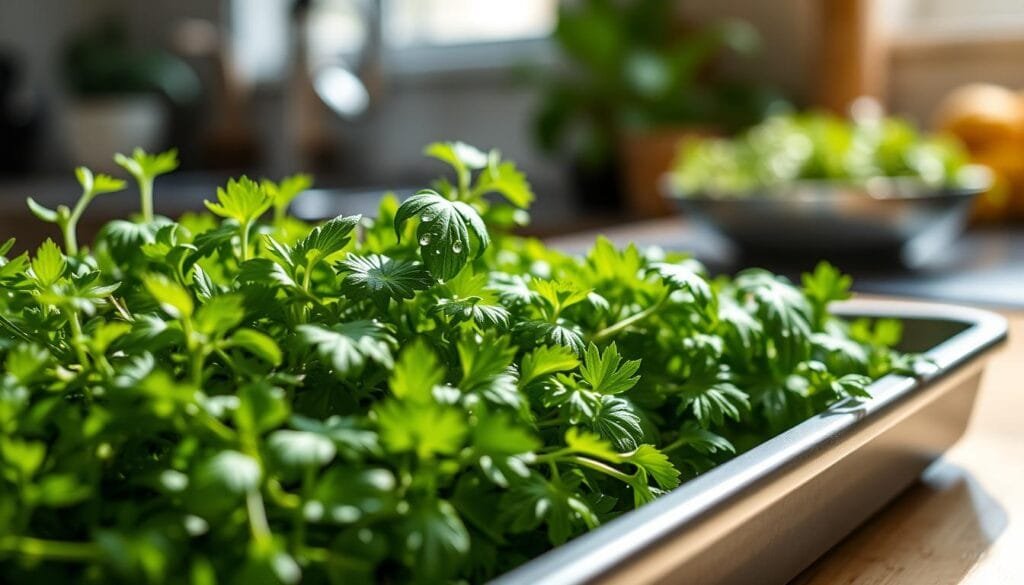
When I freeze herbs, I start by selecting the best leaves from my garden. I wash them gently to remove dirt and pat them dry to prevent ice crystals. Then, I pack them into freezer-grade zipper-lock bags, squeezing out as much air as possible to avoid freezer burn.
This basic method works well for hardy plants like rosemary and thyme. For tender varieties like basil or cilantro, I sometimes blanch them briefly in hot water before freezing. This helps retain their color and flavor, making them perfect for cooked dishes.
Innovative Freezing Techniques: Ice Cubes, Herb Cigars & Oil-Based Freezing
For added convenience, I often freeze chopped herbs in ice cube trays. I fill the trays with water or oil, depending on how I plan to use them. Oil-based cubes are especially great for sautéing, as they infuse dishes with rich flavor.
Another technique I love is making “herb cigars.” I tightly roll the leaves in plastic wraps or bags, minimizing air exposure. This method is ideal for herbs I want to use in larger quantities, like parsley or mint.
From my experiments, I’ve found that oil-based freezing tends to retain flavor better than water-based methods. This small tweak makes a big difference in the final dish.
| Method | Best For | Tips |
|---|---|---|
| Basic Freezing | Hardy herbs (rosemary, thyme) | Remove air from bags to prevent freezer burn. |
| Ice Cube Trays | Tender herbs (basil, cilantro) | Use oil for richer flavor in cooked dishes. |
| Herb Cigars | Large quantities (parsley, mint) | Roll tightly to minimize air exposure. |
Labeling and dating my frozen herbs is a step I never skip. It helps me manage storage time effectively and ensures I use them while they’re at their best. Experimenting with these techniques has made freezing herbs a fun and rewarding part of my gardening routine.
Alternative Herb Preservation Methods
Exploring creative ways to extend the life of my garden’s bounty has become a favorite kitchen experiment. Beyond traditional techniques, I’ve discovered methods that not only preserve flavor but also add a gourmet touch to everyday meals. These alternatives are perfect for those who want to get the most out of their harvest.

Preserving Flavor with Herbed Butter, Salt, and Sugar
One of my go-to methods is making herbed butter. I mix finely chopped leaves with softened butter, creating a spreadable delight. This method works wonders for garlic, rosemary, and thyme. I store it in a sealed container or roll it into logs wrapped in parchment paper for easy slicing.
Another favorite is preserving with salt or sugar. Layering fresh leaves in a jar with coarse salt or sugar creates a flavorful infusion. The salt version is perfect for seasoning dishes, while the sugar adds a sweet twist to desserts. Both options keep well in a cool, dry place.
Infused Vinegar and Honey for Versatile Uses
Infusing vinegar with leaves is a simple yet effective way to add depth to salad dressings and marinades. I fill a jar with fresh herbs, cover them with vinegar, and let it sit for a few weeks. The result is a tangy, aromatic liquid that elevates any dish.
Herbal honey is another gem. I combine fresh leaves with honey in a jar, allowing the flavors to meld over time. This sweet infusion is perfect for glazes, teas, or drizzling over desserts. It’s a versatile addition to my pantry.
| Method | Best For | Tips |
|---|---|---|
| Herbed Butter | Spreadable flavor for bread, pasta, or vegetables | Use unsalted butter for better control of seasoning. |
| Salt/Sugar Preservation | Seasoning or sweetening dishes | Use coarse salt or sugar for better texture. |
| Infused Vinegar | Salad dressings, marinades | Choose a neutral vinegar, such as white wine or apple cider. |
| Herbal Honey | Glazes, teas, desserts | Use mild-flavored honey to let the herbs shine. |
These alternative methods have transformed how I use my garden’s bounty. They’re practical and flavorful and add a personal touch to my cooking. Whether you’re a seasoned gardener or just starting out, these techniques are worth trying.
Conclusion
Bringing the taste of my garden into every meal has been a rewarding journey. Exploring different methods to keep my fresh herb collection vibrant has taught me the value of versatility and creativity in the kitchen.
Each method has its unique benefits, from drying to freezing. Drying concentrates the flavor, while freezing keeps the leaves close to their natural state. Alternative techniques like herbed butter or infused honey add a gourmet touch to everyday dishes.
I encourage you to try these techniques in your own kitchen. Adapt them to suit your preferences, and enjoy the fresh herb flavors all year round. Whether you’re a seasoned gardener or just starting, these methods are simple and effective.
Thank you for joining me on this exploration. With the right approach, the garden’s bounty can elevate your cooking and bring joy to every meal. Start preserving today and savor the taste of your harvest long after the season ends.