
Pollinators like bees and butterflies are essential for our ecosystem. Sadly, their populations are declining due to habitat loss and environmental changes. Even small spaces can become a haven for these vital creatures.
By designing a pollinator-friendly space, you can support biodiversity while adding beauty to your surroundings. Choosing native plants and preparing the soil properly are key steps. Seasonal planning and eco-friendly maintenance ensure your garden thrives year-round.
Collaborating with organizations like the Pollinator Partnership and Butterflyway Project can amplify your efforts. Whether it’s a balcony garden or a community plot, every space counts. Together, we can create vibrant habitats that benefit both nature and people.
Key Takeaways
- Pollinators are crucial for ecosystems but face population declines.
- Small spaces can make a big difference in supporting biodiversity.
- Native plants are essential for a thriving pollinator garden.
- Seasonal planning and eco-friendly practices ensure long-term success.
- Collaborating with organizations enhances your impact.
Why Pollinator Gardens Matter
Pollinators play a vital role in sustaining our ecosystems and food systems. According to the U.S. Fish & Wildlife Service, 75% of flowering plants rely on these creatures for reproduction. Without them, our landscapes would lose much of their beauty and diversity.
Pollinators also contribute to one-third of global food production. From apples to almonds, many of the foods we enjoy depend on their work. As Roger Lang, an expert in environmental science, puts it, “Pollinators are the great connectors in our food systems.”
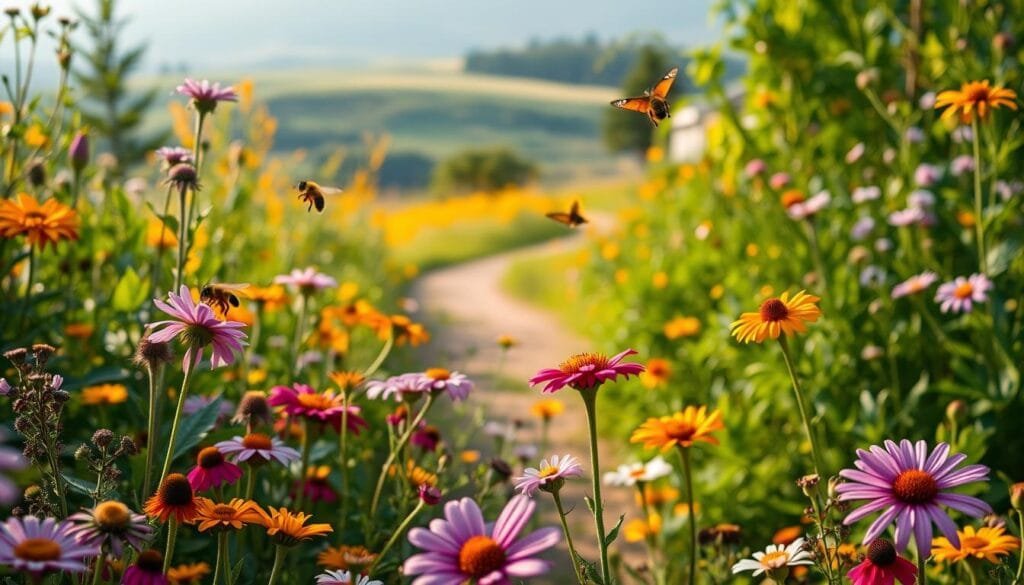
Sadly, pollinators face significant threats, primarily due to habitat loss. Urbanization, agriculture, and climate change have reduced the spaces where they can thrive. Species like the monarch butterfly, which depends on milkweed for survival, are particularly vulnerable.
The U.S. Fish & Wildlife Service urges the public to take action. By creating pollinator-friendly spaces, we can help restore biodiversity and support these essential creatures. Even small efforts can make a big difference in preserving our ecosystem.
Building a pollinator garden isn’t just about helping wildlife—it’s about ensuring a healthy future for our planet. Every flower planted and every habitat restored brings us one step closer to a thriving environment.
Planning Your Pollinator Garden
The foundation of a thriving pollinator habitat lies in careful preparation. Choosing the right location and understanding your soil and sunlight conditions are essential steps. Whether you have a spacious yard or a small urban space, thoughtful planning ensures your garden supports pollinators effectively.
Choosing the Right Location
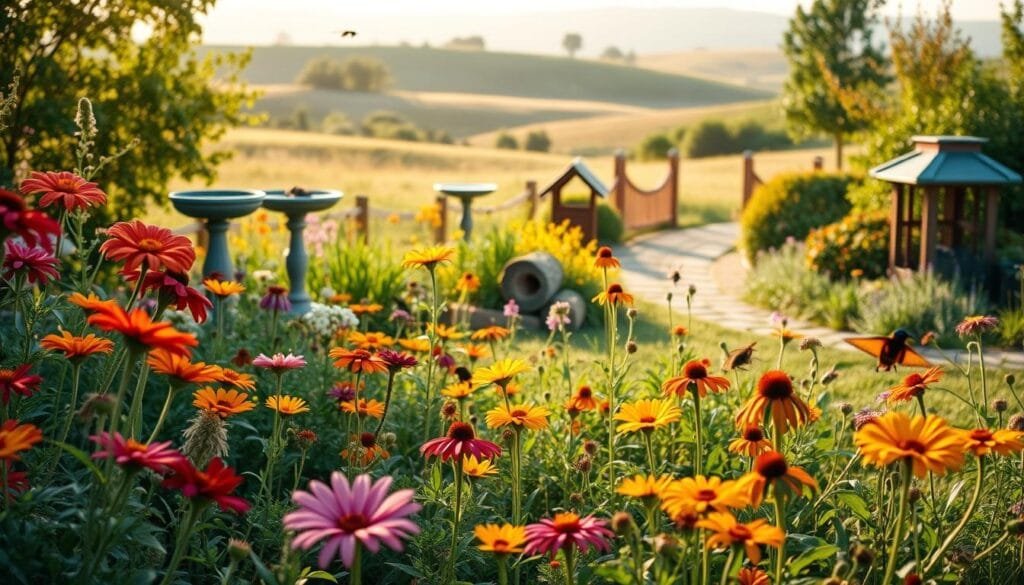
Butterflies and bees thrive in sunny, wind-protected areas. For example, bergamot flowers flourish in full sun, while partial shade works for other species. South-facing walls create microhabitats for heat-loving plants, offering warmth and shelter.
Urban gardeners can use raised beds or containers to maximize limited space. These options allow you to control soil quality and drainage, ensuring optimal growing conditions.
Assessing Soil and Sunlight
Understanding your soil type is crucial. Use county soil mappers to identify its composition. The “jar test” is a simple method to check drainage—fill a jar with soil and water, then observe how quickly it drains.
Match plant choices to your USDA hardiness zone for better results. For instance, milkweed thrives in zones 3-9, making it a versatile option for many regions. Proper sunlight and soil preparation ensure your garden supports pollinators year-round.
How to Choose the Best Plants for Pollinators
The right plants can transform your space into a pollinator paradise. By focusing on native plants, you provide food and shelter for local species. These plants are adapted to your region’s climate, making them easier to grow and maintain.
Selecting Native Plants
Native plants support 29 times more biodiversity than non-native options. For example, milkweed is essential for monarch butterflies, while spicebush attracts swallowtails. These host plants are crucial for the life cycles of many pollinators.
Grouping plants in 1-meter diameter “floral bullseyes” creates a concentrated food source. This approach maximizes pollen and nectar availability, attracting more bees and butterflies.
Ensuring Year-Round Blooms
Pollinators need food throughout the year. Plan your garden to include flowers that bloom in different seasons. Start with crocus in spring, followed by aster in summer, and goldenrod in fall.
This variety ensures a continuous supply of nectar and pollen. Avoid “double bloom” hybrids, as they often lack the resources pollinators need.
Seeds vs. Starter Plants
Starting from seeds is cost-effective, with prices as low as $0.10 per seed. However, it requires more time and patience. Starter plants, priced between $5 and $15, offer immediate results but are more expensive.
Dr. Tallamy’s research highlights the importance of choosing the right host plants. Whether you opt for seeds or starter plants, prioritize species that support local pollinators.
Planting and Preparing Your Garden
Transforming your outdoor space into a thriving habitat starts with proper preparation. Healthy soil and thoughtful planting techniques are the foundation of a successful garden. Whether you’re converting a lawn or starting from scratch, these steps will guide you.
Prepping the Soil
Begin by smothering grass with cardboard and mulch. This eco-friendly method eliminates weeds and enriches the soil. For nutrient-rich layers, try “lasagna gardening.” Alternate organic materials like leaves, compost, and straw to create a fertile base.
Fall is ideal for seeding. Cold stratification during winter helps seeds germinate in spring. Avoid landscape fabric, as it restricts root growth and water flow. Instead, use natural mulch to retain moisture and suppress weeds.
Planting Techniques
When handling plants, be gentle with the rootball. For example, coneflowers thrive when their roots are undisturbed. Space plants using the “mature width + 6 inches” formula to ensure they have room to grow.
For seeds, consider sowing them in snow. This method mimics natural conditions and improves germination rates. Alternatively, transplant starter plants in spring for quicker results.
| Method | Best Time | Advantages |
|---|---|---|
| Fall Seeding | Late Fall | Cold stratification improves germination |
| Spring Transplants | Early Spring | Immediate results, less waiting time |
Maintaining Your Pollinator Garden
Keeping your garden thriving requires consistent care and attention. Proper maintenance ensures it remains a welcoming habitat for bees, butterflies, and other insects. From watering techniques to protecting these vital creatures, every step matters.
Watering and Weeding
Watering your garden correctly is crucial. Use the “finger test” to check soil moisture—insert your finger about an inch deep. If it feels dry, it’s time to water. Overwatering can harm plants and attract unwanted insects.
Weeding is equally important. Remove weeds regularly to prevent them from competing with your plants for nutrients. For a natural approach, use mulch to suppress weeds and retain moisture.
Protecting Pollinators
Avoid using chemical pesticides that can harm pollinators. Instead, opt for organic solutions like soapy water sprays or companion planting with marigolds. These methods keep pests at bay without endangering beneficial insects.
Create “messy zones” with leaf litter and dead wood. These areas provide shelter for overwintering bees and other creatures. Leave stems standing until winter ends to offer additional protection.
Building bee hotels from drilled logs is another way to help pollinators. These structures provide nesting sites for solitary bees, enhancing your garden’s biodiversity.
By following these practices, you can maintain a healthy garden that supports and protects pollinators. Every effort you make contributes to a thriving ecosystem.
Conclusion
Watching the first swallowtails flutter into your pollinator garden is a rewarding experience. It’s a sign that your efforts to support pollinators are paying off. These moments remind us of the beauty and importance of these vital creatures.
Consider joining citizen science projects like Monarch Watch to contribute to pollinator conservation. These initiatives help track and protect species like bees and butterflies, ensuring their survival for future generations.
For more guidance, explore resources from the Native Plant Society and the Xerces Society. These organizations offer valuable tips on selecting native plants and maintaining a thriving pollinator garden.
Your garden matters! Every flower planted and every habitat restored makes a difference. Together, we can create spaces that nurture both nature and people.
FAQ
Why are pollinator gardens important?
Pollinator gardens provide essential habitat and food sources for bees, butterflies, and other insects. They help support biodiversity and ensure the health of ecosystems by aiding in plant reproduction.
What’s the best location for a pollinator garden?
Choose a sunny spot with at least six hours of sunlight daily. Ensure the area has good drainage and is protected from strong winds to create a welcoming environment for pollinators.
How do I select the right plants for pollinators?
Focus on native plants that thrive in your region. Include a variety of flowering plants that bloom in spring, summer, and fall to provide nectar and pollen throughout the growing season.
Should I use seeds or starter plants for my garden?
Both options work! Seeds are cost-effective and offer a wide variety, while starter plants provide quicker results. Choose based on your timeline and gardening experience.
How do I prepare the soil for planting?
Start by removing weeds and loosening the soil. Add compost or organic matter to improve fertility and drainage, ensuring a healthy foundation for your plants.
What’s the best way to water a pollinator garden?
Water deeply but infrequently to encourage strong root growth. Use a soaker hose or drip irrigation to minimize water waste and keep foliage dry, reducing the risk of disease.
How can I protect pollinators in my garden?
Avoid using pesticides and herbicides. Provide shelter like rocks or logs, and leave some areas of bare soil for ground-nesting bees. Plant host species to support butterfly larvae.
Can I create a pollinator garden in a small space?
Absolutely! Even a small yard, balcony, or container garden can attract pollinators. Focus on compact plants and vertical gardening to maximize your space.