
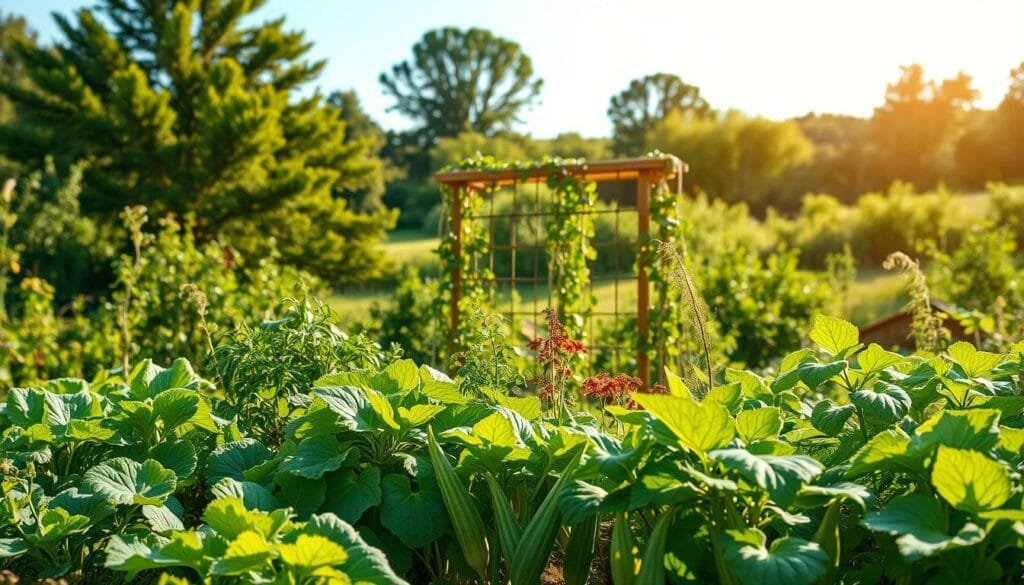
Gardening fans are discovering companion planting, a new method that is changing backyards in the U.S. This method pairs plants to create a balanced garden. It helps plants grow better, produces more Food, and keeps pests away.
Companion planting is more than just regular gardening. It lets gardeners know how plants work together. This way, they can make gardens where each plant helps the others. It’s good for the soil and keeps bugs away, making crops healthier and more plentiful.
Picture a garden where tomatoes, basil, and marigolds grow together well. That’s what companion planting does. It uses natural plant friendships to make gardens more productive.
Key Takeaways
- Companion planting creates symbiotic relationships between different plant species
- Strategic plant pairing can naturally improve garden health and productivity
- Organic gardening techniques reduce the need for chemical interventions
- Companion planting maximizes garden space and crop yields
- Natural pest control is achievable through intelligent plant combinations
Understanding the Science Behind Companion Planting
Companion planting is more than just putting plants next to each other. It’s a smart way to plan your vegetable garden. It uses science to help plants work together better. This can make your crops grow stronger and your soil healthier.

Plants communicate with each other in surprising ways. They don’t just sit next to each other. They send out chemical signals and work together through their roots.
Plant Chemical Interactions and Growth Patterns
Plants send out special chemicals that can help or hurt their neighbors. These chemicals are key to how plants grow together:
- Some plants help others grow
- Others keep pests away
- Some plants stop other plants from growing
Root System Compatibility Studies
What happens underground is just as enjoyable. Roots can either fight or work together. Knowing how roots interact is essential for a healthy garden.
Allelopathy in Garden Planning
Allelopathy occurs when plants release chemicals that affect other plants. This is important for creating a balanced garden, as it helps plants grow well and keeps the soil healthy.
Nature’s chemical communication network is far more complex than we once believed.
The Best Companion Planting Strategies for Maximum Yields
Companion planting is a key gardening technique that boosts crop production. It focuses on creating good relationships between different plants and making gardens more productive and healthy.
Choosing the right plant combinations is key to successful interplanting. These strategies help by:
- Improving nutrient absorption
- Reducing pest populations naturally
- Optimizing space utilization
- Enhancing overall plant resilience
Strategic plant pairing can transform your garden from an ordinary growing space into a high-performing ecosystem. For example, planting nitrogen-fixing legumes near vegetables helps fertilize them. This boosts crop yields.
“In nature, plants never grow in isolation. The most successful gardens mimic these natural collaborative relationships.” – Ecological Gardening Expert.
Important interplanting methods include vertical stacking, trap cropping, and crop rotation. These methods help gardeners make the most of their space. They create beneficial plant interactions that improve growth, reduce pests, and increase harvests.
- Vertical stacking: Growing tall and short plants together
- Trap cropping: Using specific plants to attract pests away from main crops
- Companion crop rotation: Systematically changing plant locations to maintain soil health
These companion planting strategies allow gardeners to create dynamic, productive spaces. These spaces work smarter, not harder.
Essential Tools and Planning Methods for Companion Gardens
Planning a vegetable garden requires innovative tools and methods. Today, gardeners have advanced tools to make companion planting and soil care easier.
Good gardening starts with knowing the best tools and methods. Here are some key tools to improve your gardening:
- Digital garden layout platforms
- Precision soil testing equipment
- Interactive seasonal planning calendars
- Mobile applications for garden tracking
Garden Layout Software and Apps
Digital tools have changed vegetable garden planning. Advanced software lets gardeners design virtual gardens. They can test plant combinations and see how plants will grow before planting.
Seasonal Planning Calendars
Seasonal calendars are key for garden planning. They help gardeners determine the best planting times, track crop rotations, and manage soil. These calendars consider local weather, frost dates, and planting times.
Soil Testing Equipment
Soil analysis is vital for good gardening. Modern soil testing kits provide detailed information on nutrients, pH, and what’s missing, helping gardeners make better planting choices.
“Knowledge of your soil is the foundation of a thriving garden.” – Professional Gardening Expert.
The proper planning tools can significantly boost your garden’s success and health.
Traditional Three Sisters Method and Modern Adaptations
The Three Sisters method is a smart way to garden, inspired by Native American wisdom. It shows how plants can help each other in a small garden. This method is all about teamwork in gardening.
This method is simple yet effective. It involves planting corn, beans, and squash together. Each plant has its role:
- Corn acts as a trellis for bean vines
- Beans help fix nitrogen in the soil
- Squash keeps weeds down and holds moisture
Today, gardeners have adapted this method. Urban gardeners use it in containers, while farmers grow it on large plots.
The Three Sisters method proves that nature’s design is more sophisticated than single-crop agriculture.
Now, gardeners are trying new things. They use:
- Dwarf corn for smaller gardens
- Different beans and squash to see what works best
- Other plants to keep pests away
Gardeners improve their gardens by using these techniques. They create vigorous, productive, and earth-friendly places, honoring the old ways of growing Food.
Herb Companions That Enhance Vegetable Growth
Herbs are more than tasty additions to our meals. They help keep pests away and improve the soil for veggies. Planting herbs with your veggies can transform your garden into a healthy, thriving place.
When used wisely, herbs strengthen gardens. Their smells and special chemicals fight off pests, keeping your veggies safe from harm.
Aromatic Herbs as Natural Pest Deterrents
Some herbs attract good bugs and keep bad ones away. Here are a few:
- Rosemary: Keeps cabbage moths and carrot flies at bay
- Mint: Keeps aphids and rodents away
- Basil: Keeps mosquitoes and flies off tomatoes
Medicinal Herb Combinations
Medicinal herbs help plants grow strong and healthy. Chamomile, for example, strengthens and makes the plants around it more resistant to disease.
Culinary Herb Partnerships
“In nature, no plant grows alone” – Garden Wisdom.
Culinary herbs like parsley, dill, and cilantro attract good bugs. They also help veggies grow better and fight off pests.
Natural Pest Control Through Strategic Plant Pairing
Gardeners looking for natural pest control find a great ally in companion planting. This method turns your garden into a balanced ecosystem, naturally keeping away harmful insects and attracting beneficial ones.
Companion planting pairs plants to disrupt pests’ life cycles. Some plants release chemicals that keep pests away, offering a safe, chemical-free defense for your garden.
- Marigolds repel nematodes and other underground pests
- Basil protects tomato plants from hornworms
- Nasturtiums act as a trap crop for aphids
Attracting beneficial insects is key to managing pests naturally. Gardeners can keep their gardens balanced by planting plants that attract predators.
“A diverse garden is a resilient garden” – Permaculture Wisdom
Some plants are great at attracting beneficial insects. These include:
- Yarrow – attracts ladybugs and parasitic wasps
- Dill – invites helpful predatory insects
- Fennel – supports diverse beneficial insect populations
The secret to successful natural pest control is understanding plant interactions and creating a harmonious garden ecosystem.
Maximizing Space with Vertical Companion Planting
Vegetable garden planning doesn’t have to be limited by square footage. Vertical companion planting offers innovative solutions for gardeners with small spaces. It transforms compact areas into productive growing zones. Interplanting methods help you maximize yield while creating visually stunning garden designs.
Savvy gardeners know growing upward opens countless possibilities for vegetable cultivation. Using strategic vertical gardening techniques can dramatically increase vigorous, productive, and kind places, along with a watch, and improve your garden’s productivity.
Trellis Systems for Climbing Plants
Vertical trellises provide exceptional opportunities for space-efficient gardening. Consider these top climbing plant combinations:
- Pole beans with corn stalks
- Cucumbers alongside sturdy metal frames
- Peas growing on bamboo supports
Tiered Garden Structures
Tiered gardens create multiple growing levels, dramatically increasing your planting capacity. Gardeners can design these structures using the following:
- Wooden pallets
- Stacked planters
- Hanging garden systems
Container Combinations
Container gardening enables flexible interplanting methods for urban and small-space environments. Choose containers that complement each other’s growth requirements.
| Container Type | Best Plant Combinations | Space Requirements |
|---|---|---|
| Large Rectangular Planter | Tomatoes with basil | 24-36 inches |
| Hanging Basket | Strawberries with trailing herbs | 12-18 inches |
| Vertical Wall Planter | Lettuce with compact herbs | 6-12 inches |
Successful vertical companion planting requires understanding each plant’s unique growth characteristics and sunlight requirements.
Soil Health Enhancement Through Plant Diversity
Gardeners can change their landscapes by using plant diversity. Each plant has unique traits that make the ecosystem vibrant and healthy.
Biodiversity is more than just a concept. It’s a way to make gardens strong and resilient. Different plants work together to improve the soil and help nutrients move around.
- Root systems create underground channels for water and air circulation
- Varied plant roots extract nutrients from different soil depths
- Organic matter from diverse plant decomposition enriches soil composition
Choosing the right plants can improve soil health. Legumes, for example, add nitrogen to the soil, helping other plants. Deep-rooted plants loosen compacted soil, while shallow-rooted ones stop erosion.
Diverse plant communities are nature’s soil restoration system.
Gardeners can create a self-sustaining system by mixing different plants. This system requires less fertilizer and helps the soil heal naturally.
- Integrate nitrogen-fixing plants like beans and clover
- Rotate crop families to prevent nutrient depletion
- Use cover crops to protect and enrich soil during off-seasons
Learning about these plant interactions turns gardening into a complex art. It’s not just about growing plants; it’s about managing a whole ecosystem.
Seasonal Companion Planting Guidelines
Planning your vegetable garden requires careful consideration for each season. Crop rotation is key to keeping soil healthy and boosting garden output yearly. Pairing and rotating the correct plants seasonally can turn your garden into a thriving space.
Successful gardeners adapt to each season’s unique needs for companion planting. The right matches can protect your crops, increase yields, and balance your garden.
Spring Combinations
Spring offers chances for exciting plant pairings. Here are some smart choices:
- Plant peas with carrots to make the most of space
- Combine radishes with spinach for quick harvests
- Interplant lettuce with taller, slower-growing vegetables
Summer Partnerships
Summer calls for heat-tolerant plant combinations. Effective strategies include:
- Grow basil near tomatoes to repel pests
- Plant beans alongside corn for mutual support
- Use marigolds as protective companion plants
Fall Planning Strategies
Fall crop rotation needs careful planning for cooler temperatures and shorter seasons. Focus on:
- Planting cold-hardy vegetables like kale and Brussels sprouts
- Implementing cover crops to restore soil nutrients
- Preparing garden beds for winter regeneration
“The secret to a productive garden is understanding the rhythm of seasons and working with nature’s cycles.” – Experienced Gardener.
Gardeners can create resilient, productive landscapes by embracing seasonal companion planting and crop rotation. These gardens yield bountiful harvests year after year.
Pollinator-Friendly Companion Combinations
Creating a vibrant garden ecosystem involves more than growing veggies. It also involves attracting beneficial insects. By choosing the right companion plants, you can turn your garden into a haven for pollinators.
Pollinators are key to plant reproduction and ecosystem health. They move pollen between flowers, helping plants make fruit and seeds. Gardeners can design spaces that welcome these vital creatures.
- Attract bees with lavender and borage
- Invite butterflies using zinnia and marigolds
- Draw beneficial wasps with dill and fennel
A pollinator garden needs a variety of plants to thrive. Native wildflowers are perfect for attracting beneficial insects, and planting them in clusters helps guide pollinators through the garden.
“A garden without pollinators is like a symphony without musicians.” – Native Plant Trust.
Try creating layers of plants with different bloom times. This will ensure that pollinators always have Food, boosting biodiversity all year.
- Spring: Plant crocus and fruit tree blossoms
- Summer: Sunflowers and echinacea
- Fall: Asters and goldenrod
Using these methods, gardeners can create ecosystems supporting crops and local wildlife.
Troubleshooting Common Companion Planting Issues
Companion planting can be tricky, even for seasoned gardeners. It needs careful watching of how plants interact and any conflicts. To plan a successful vegetable garden, you must know how to solve common problems when growing different plants together.
Gardeners often encounter unexpected problems with companion planting. If not fixed quickly, these issues can harm crop yields and plant health.
Identifying Plant Conflicts
It’s key to spot possible plant problems early in organic gardening. Some plants compete for resources or release chemicals that harm each other’s growth.
- Watch for stunted growth in adjacent plants
- Monitor leaf discoloration or unusual wilting
- Check root system interactions
Adjusting Plant Spacing
Getting the spacing right is vital in vegetable garden planning. Each plant has its own needs for growing and root space.
| Plant Combination | Recommended Spacing | Potential Issues |
|---|---|---|
| Tomatoes and Basil | 12-18 inches | Root competition |
| Carrots and Onions | 4-6 inches | Nutrient sharing |
| Beans and Corn | 8-12 inches | Climbing interactions |
Managing Competition
Good companion planting means managing how plants interact. Please monitor your garden and be ready to make changes.
“In nature, plants are constantly negotiating for resources. Your job is to create harmony, not conflict.” – Expert Gardener.
By grasping these basics, gardeners can build thriving, productive gardens. These gardens will grow well and avoid most conflicts.
Conclusion
Diving into companion planting changes how we garden. It’s more than just where you put plants; it’s about creating a system in which each plant helps the others.
Those who learn this way can make their gardens better. They get natural pest control and better soil. It’s a way to garden that works with nature.
Trying out different plants is fun. You can start small and watch what happens. Every garden is different, so you might need to adjust.
Companion planting is both science and art. It requires you to watch, feel, and respect nature. As you learn, you’ll better understand your garden and how plants help each other.
FAQ
What exactly is companion planting?
Companion planting is a way to grow different plants together. It helps them develop better and keeps pests away. It’s like creating a garden where plants help each other.
How does companion planting help with pest control?
Some plants keep pests away or attract good bugs. For example, marigolds fight nematodes. Basil and cilantro bring in bugs that eat pests, cutting down on chemicals.
Can companion planting increase my garden’s productivity?
Yes, it can! Pairing plants correctly can make your garden healthier and more productive. It also improves the use of space and boosts yields.
What are some classic companion planting combinations?
The Three Sisters method is a classic. Corn, beans, and squash work well together. Tomatoes, basil, carrots, onions, and lettuce with tall plants are also good pairs.
Is companion planting suitable for small gardens or container gardening?
Definitely! It’s perfect for small spaces. Use vertical gardening and innovative pairings to make the most of your space.
How do I know which plants work well together?
Could you do your research? Some plants get along with each other, while others don’t. Use guides and books to find the best pairings for your garden.
Does companion planting work for organic gardening?
Yes, it’s a key part of organic gardening. It’s a natural way to control pests and improve soil without chemicals.
Can companion planting help improve soil health?
Absolutely! Plants add nutrients and improve soil structure. Legumes fix nitrogen, and deep-rooted plants break up hard soil.
Are there any plants I should never grow together?
Yes, some plants compete or harm each other. Tomatoes, potatoes, and fennel with most veggies, along with a watch, should be kept apart.
How long does it take to see benefits from companion planting?
Results can take a season to appear. Be patient, observe, and adjust your garden as needed.