
Urban homesteading is changing city living into a green lifestyle. More than half of city folks want to grow their own food. This movement is growing fast in the United States.
Modern urban homesteaders are finding new ways to live green in small spaces. They use container gardens and rooftop patches to grow food. They also work to reduce waste and live more eco-friendly.
Even those with little space can start urban homesteading. Studies show 70% of urban gardeners use containers. This shows that with a little creativity, anyone can grow their own food, no matter the space.
Key Takeaways
- Urban homesteading is accessible to everyone, regardless of living space
- Container gardening offers flexible solutions for small areas
- Growing your own food can reduce household expenses by up to 25%
- Urban homesteading promotes sustainable living practices
- Even small steps toward self-sufficiency can make a significant impact
Understanding Urban Homesteading for Beginners
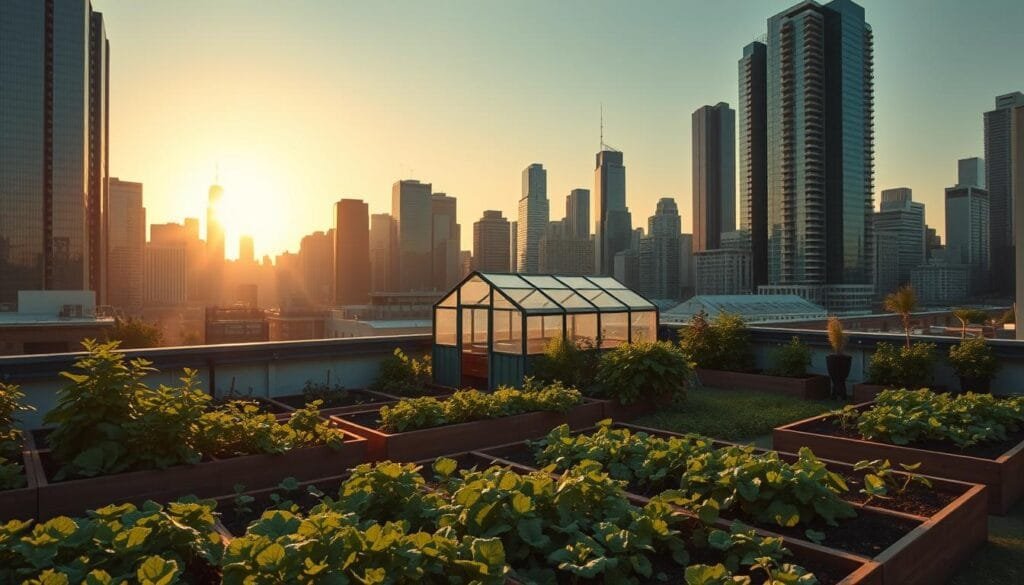
Urban homesteading is a new way to live sustainably in cities. It makes small spaces in the city into places where you can grow food. This helps reduce harm to the environment and connects us with nature.
What Makes Urban Homesteading Unique
Urban gardening is different from traditional homesteading because it uses small spaces. People can turn balconies, rooftops, and tiny yards into places to grow food. This supports living in a way that’s good for the planet.
- Utilizes spaces as small as 600 square feet
- Adapts agricultural techniques to city environments
- Emphasizes resource optimization
- Promotes community resilience
Core Principles of Urban Homesteading
The main ideas of urban homesteading are about being self-sufficient and caring for the environment. People try to:
- Grow their own food
- Reduce waste by composting
- Use vertical gardening
- Make systems that work together
Benefits of Urban Homesteading
Urban homesteading brings many benefits. It improves mental health, lowers carbon footprint, and strengthens community bonds. Gardening is also good for stress and overall well-being.
Urban homesteading is more than a hobby—it’s a conscious decision to transform personal spaces into productive, sustainable ecosystems.
Getting Started with Indoor Food Production
Urban agriculture turns small spaces into gardens, giving city folks a chance to grow food at home. It’s a big deal for those with little outdoor space.
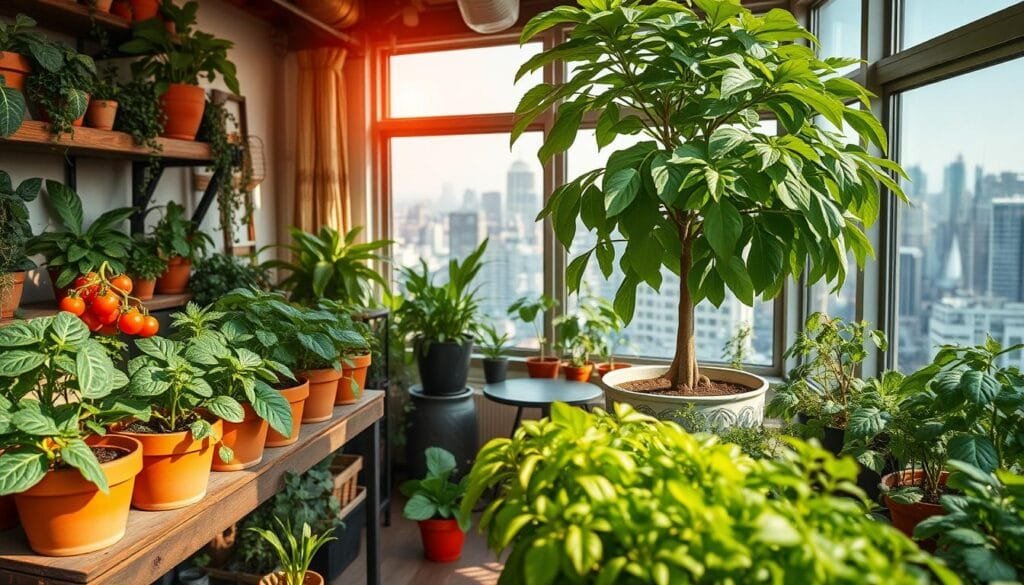
Indoor gardening is a big win for urban folks wanting to grow their own food. With new techniques, anyone can make a space that grows healthy food.
Setting Up an Indoor Garden
Starting an indoor garden needs careful planning. You must think about:
- Choosing the right grow lights for plants
- Picking containers that drain well
- Finding the best spot with enough light
- Knowing what temperature and humidity plants need
Best Plants for Indoor Growing
Some plants do great indoors. Urban gardeners can grow:
- Herbs: Basil, mint, parsley, and chives
- Leafy Greens: Spinach, lettuce, and kale
- Compact Vegetables: Cherry tomatoes, peppers, and microgreens
Hydroponics and Vertical Gardening Solutions
Hydroponics and vertical gardening are top-notch for indoor growing. They help grow lots of food in small spaces, without needing soil.
Vertical gardening turns walls and corners into gardens. It makes backyard farming possible in small urban spaces.
Creating a Small-Space Garden System
Urban gardening turns small outdoor spots into green mini-ecosystems. Even a tiny balcony or small yard can bloom into a permaculture garden with clever planning. It’s all about using every inch wisely.
For small gardens, think outside the box. Use vertical growing and container gardening to make the most of your space. Raised beds are perfect for growing lots of food in a small area.
- Select compact vegetable varieties
- Utilize vertical gardening techniques
- Implement raised bed solutions
- Choose multi-purpose plant varieties
Container gardening is a game-changer for city gardeners. Herbs like thyme, mint, and chives do great in tight spots. Even shady balconies can grow greens like lettuce, spinach, and arugula.
| Space Type | Recommended Crops | Growing Technique |
|---|---|---|
| Balcony | Herbs, Leafy Greens | Container Gardening |
| Small Yard | Tomatoes, Peppers | Vertical Gardening |
| Raised Beds | Root Vegetables | Intensive Planting |
Vertical gardening boosts your harvest. Plants like pole beans, cucumbers, and tomatoes grow up, saving space. With smart planting, you can grow a lot of food in a little area.
Urban gardening isn’t about size—it’s about creativity and smart design.
Permaculture teaches us to see each plant and space as part of a bigger system. By designing your garden with care, you can make a small space into a food-producing haven. It’s all about creating a sustainable, productive mini-ecosystem right at home.
Essential Skills for Urban Homesteaders
Urban homesteading turns city living into a green lifestyle. It lets people live more independently. Learning key skills helps make homes more eco-friendly and strong.
Food Preservation Techniques
Knowing how to preserve food is key for a green lifestyle and cutting down on waste. Urban homesteaders can learn to keep their harvests fresh longer:
- Canning seasonal produce
- Dehydrating fruits and vegetables
- Fermenting foods like sauerkraut and kimchi
- Freezing herbs and prepared meals
With practice, they can fill their pantries with healthy, homemade foods all year. Even a small backyard, 12′ x 12′, can grow enough to support these methods.
Basic DIY Skills
Practical skills are vital for urban homesteading. Important DIY skills include:
- Simple home repairs
- Sewing and mending clothes
- Making non-toxic cleaning products
- Basic carpentry and maintenance
These skills save money and cut down on commercial product use. Being able to sew a button or fix something shows true homesteading spirit.
Sustainable Living Practices
Urban homesteaders can live green with creative ways:
- Composting kitchen scraps
- Reducing single-use plastics
- Creating eco-friendly alternatives
- Implementing energy conservation methods
By using these methods, city folks can lessen their environmental impact. They can also live more independently.
Composting and Waste Management
Starting your journey to sustainable living is easy. It begins in your kitchen with composting. By turning kitchen scraps and yard waste into fertilizer, you create a cycle of life in your home or small space.
Composting is more than recycling. It’s a way to lessen our environmental footprint and make valuable resources for gardens. Learning the basics can turn waste into something precious for your garden.
Essential Composting Techniques
- Indoor vermicomposting using worm bins
- Compact compost tumbler for small spaces
- Bokashi fermentation method
- Countertop compost collection systems
The perfect compost mix has green and brown materials. You want a 2:1 ratio of carbon-rich browns to nitrogen-rich greens. This balance helps decomposition work best.
| Compost Component | Examples | Ratio |
|---|---|---|
| Green Materials (Nitrogen) | Food scraps, coffee grounds, fresh grass clippings | 1 part |
| Brown Materials (Carbon) | Dry leaves, cardboard, paper, wood chips | 2 parts |
Right conditions are key for good composting. Your pile should be 100-140 degrees Fahrenheit and 3 feet wide. Turning it every other day helps it break down faster and keeps it smelling good.
Composting can reduce greenhouse gas emissions by preventing methane production in landfills and cutting CO2 from waste transportation.
By composting, urban homesteaders can cut down on waste a lot. Over 30% of landfill waste is organic material that can become soil. Composting is a big step towards living sustainably.
Urban Animal Husbandry Options
Urban homesteading brings new chances to raise animals in small spaces. It turns backyard farming into a real way to be self-sufficient. City folks can now pick from many animal options that fit their urban life and help the planet.
Backyard Chickens: A Gateway to Urban Livestock
Keeping backyard chickens is getting more common in cities. These birds need just a little space, about 10 square feet per hen. They give fresh eggs and help control pests in gardens.
- Ideal for small spaces
- Provides fresh eggs
- Helps with garden pest management
Beekeeping: Small Space Ecosystem Support
Urban beekeeping is a great way to be self-sufficient and help the environment. Honey bees do well in small city areas, making more honey than they need for winter. They are key to local ecosystem health and pollination.
| Bee Type | Urban Suitability | Honey Production |
|---|---|---|
| Urban Honeybees | Excellent | High Yield |
Alternative Small Animal Options
Urban homesteaders can also consider other small animals. Quail and rabbits are good for meat, eggs, and garden help, needing little space.
- Quail: Quiet and space-efficient
- Rabbits: Meat, fiber, and garden fertilizer production
- Ducks: Excellent egg layers
The growth of urban animal care shows a shift towards local food and green living. By picking the right animals and knowing their needs, city homesteaders can build mini-ecosystems in their backyards.
Building a Self-Sufficient Kitchen
Urban homesteading turns kitchens into centers of self-sufficiency. During the COVID-19 pandemic, many families started making meals from scratch. This reduced their need for store-bought food. With careful planning, your kitchen can become a place of homesteading skills and creativity.
Creating a self-sufficient kitchen involves several key strategies:
- Cooking entirely from scratch
- Preserving homegrown produce
- Minimizing food waste
- Developing essential culinary skills
Home cooking can save a lot of money. Preparing meals from scratch can save families up to 30% on grocery bills. For example, homemade bread costs about $0.50 per loaf, while store-bought is more expensive. Homemade pasta is about $0.25 per serving, compared to $1.00 for store-bought.
| Kitchen Skill | Cost Savings | Time Investment |
|---|---|---|
| Bread Baking | $0.50/loaf | 1-2 hours |
| Pasta Making | $0.75/serving | 30-45 minutes |
| Bulk Cooking | Up to 50% food waste reduction | 3-4 hours |
Bulk cooking and food preservation, like canning, can keep food fresh for up to 5 years. By using these homesteading skills, city dwellers can make their kitchens more sustainable and affordable.
The key to a self-sufficient kitchen is creativity, planning, and a willingness to learn new skills.
Sustainable Energy and Water Management
Urban homesteading is all about living green and off the grid. It’s about using new ways to manage energy and water. This helps us reduce harm to the environment and become more self-sufficient.
Solar Power Solutions for Urban Spaces
Solar power is a game-changer for urban homesteaders. It can cut down electricity costs by up to 70%. This makes solar panels a top choice for those who want to live sustainably.
- Portable solar panels for small spaces
- Rooftop solar system installations
- Solar-powered charging stations
- Integrated home battery storage systems
Rainwater Collection Strategies
Rainwater harvesting is key for off-grid living. It can cut down water use by about 50%. This is thanks to smart collection and management systems.
- Rooftop collection systems
- Rain barrel installations
- Filtration and purification techniques
- Landscape irrigation solutions
Energy Conservation Methods
Conserving energy is vital for sustainable urban homesteading. Smart strategies can lower carbon footprints and cut down on utility bills.
- Efficient appliance selection
- LED lighting upgrades
- Improved home insulation
- Smart home energy monitoring systems
Urban homesteading isn’t just about self-sufficiency—it’s about creating a more sustainable, connected way of living.
Community Engagement and Resource Sharing
Urban agriculture grows stronger with community ties. Sustainable living is more than personal efforts. It’s about building networks that support common goals. Homesteaders are finding ways to work together and share resources in cities.
Community engagement turns urban homesteading into a group effort. Local networks offer key support through different ways:
- Neighborhood seed exchanges
- Community garden collaborations
- Skill-sharing workshops
- Online resource platforms
Digital platforms have changed how urban homesteaders connect. Social media groups and forums let them share knowledge and resources quickly.
| Connection Method | Engagement Rate |
|---|---|
| Facebook Groups | 75% |
| Local Workshops | 40% |
| Farmers Markets | 50% |
| Online Forums | 70% |
Collaborative urban homesteading multiplies individual capabilities. By sharing extra food, trading skills, and supporting each other’s goals, communities get stronger and more self-sufficient.
“In urban homesteading, your neighbor’s success is your success.” – Urban Farming Collective
Financial Aspects of Urban Homesteading
Urban homesteading is a smart way to live self-sufficiently and save money. It’s about planning your finances well and making smart investments.
By growing your own food, you can cut down on grocery bills. Studies show that a suburban backyard can produce about 50% of a family’s food.
Initial Investment Considerations
Starting an urban homestead needs careful financial planning. You’ll need to invest in:
- Gardening tools and seed starting supplies
- Hydroponic systems
- Basic infrastructure for food production
- Potential property modifications
Long-term Cost Benefits
Urban homesteading saves money over time. You can save:
| Expense Category | Potential Annual Savings |
|---|---|
| Grocery Expenses | $1,500 – $3,000 |
| Egg Production | $500 – $800 |
| Vegetable Costs | $800 – $1,200 |
Money-saving Strategies
Smart homesteaders find ways to save money:
- Find materials online on Craigslist
- Use community garden plots
- Make money from different sources
- Use social media to earn
“Urban homesteading is not just about saving money, but creating a sustainable lifestyle that connects you with your food and community.”
Urban homesteading offers more than just saving money. It’s a way to live sustainably and effectively with a small investment of time and resources.
Conclusion
Urban homesteading is an exciting journey for beginners. It’s not just about growing food or saving energy. It’s a way to live in the city that connects you with nature and helps you make a difference.
Urban homesteading is flexible. You can start small, even in a tiny space. Growing microgreens or using solar power are great ways to begin. Every little bit helps in making your life greener.
Studies show that urban homesteading is good for your health and the local economy. By growing your own food and saving water, you save money and build a stronger community. It’s a smart way to live.
Your journey in urban homesteading is personal and always changing. Begin with small steps, learn as you go, and stay open to new ideas. The key is to start and keep moving toward a greener, more self-sufficient life that benefits everyone.