
In today’s world, more people want to grow their own food. This is true for home gardening fans. Two systems, aquaponics and hydroponics, are popular for this goal. They each have their own benefits and challenges, leading to a debate.
This article will help you decide which system is better for self-sufficiency. It will give you insights into how these systems work. Whether you’re an experienced gardener or new to it, knowing about these systems is key to making a good choice for your garden.
Key Takeaways
- Aquaponics combines fish farming with plant cultivation for a holistic ecosystem.
- Hydroponics grows plants in nutrient-rich water, requiring no soil.
- Both systems contribute to self-sufficiency by allowing home production of food.
- Understanding the differences is essential for effective home gardening.
- Cost and maintenance vary significantly between aquaponics and hydroponics.
- Choosing the right system can enhance sustainable living practices.
Introduction to Self-Sufficiency in Food Production
As global food security worries grow, self-sufficiency in food production becomes more important. Sustainable farming lets people grow their own food, improving their health and well-being. Even in cities, where food options are limited, new ways to grow food in small spaces are being found.
Sustainable farming boosts food production while reducing harm to the environment. Homeowners can save money and eat healthier by growing their own food. This approach also strengthens the bond with nature and promotes a healthier lifestyle.
Choosing self-sufficiency helps reduce carbon emissions and supports local ecosystems. Many are drawn to this way of living for its health benefits and environmental advantages. This shift towards sustainable practices is part of a larger movement towards a more resilient and eco-friendly world.
Understanding Aquaponics
Aquaponics is a new way to farm that mixes fish and plants together. Fish and plants help each other grow, making food and protecting the environment. It’s a smart way to farm that’s good for our planet.
What is Aquaponics?
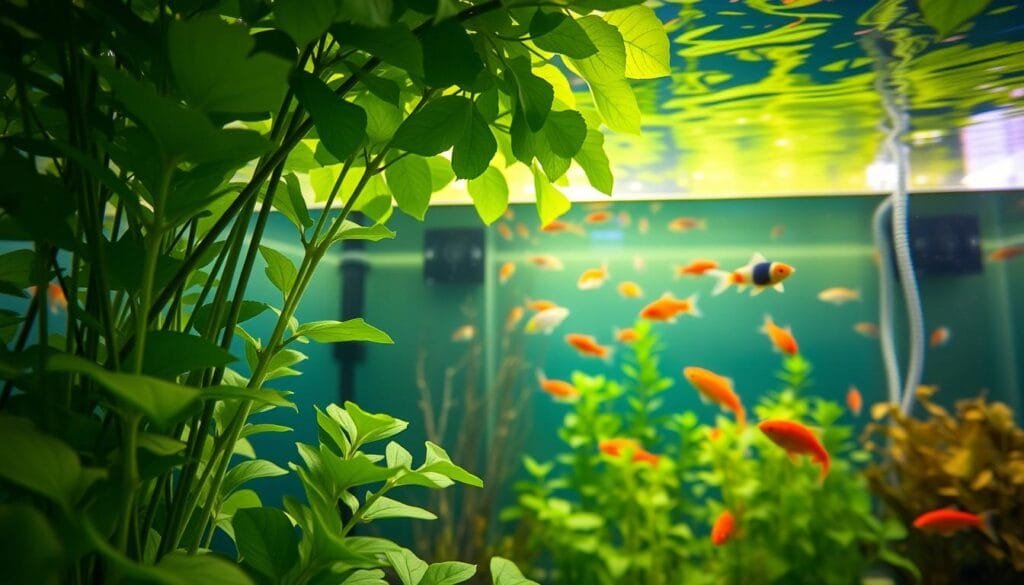
Aquaponics is a way to grow food by raising fish and plants together. Fish live in tanks and their waste helps plants grow. Plants clean the water, which goes back to the fish. This helps both plants and fish grow well.
How Aquaponics Works
An aquaponic system has fish tanks, grow beds, and a water pump. Water from the fish tanks goes to the grow beds. Plants soak up nutrients and clean the water.
The clean water then goes back to the fish tanks. This saves water and makes farming more efficient. It’s a great way to grow food and use resources wisely.
Exploring Hydroponics
Hydroponics is a new way to grow plants without soil. It uses water full of nutrients instead. This method helps plants grow well in a controlled space, making farming more sustainable.
There are many hydroponic systems, like deep water culture and nutrient film technique. Aeroponics is another one. Each system has its own way of working. Gardeners can pick the best one for their garden.
What is Hydroponics?
Hydroponics means growing plants in water that has all the nutrients they need. It doesn’t use soil, which can have pests and diseases. This way of growing has many benefits.
It lets you grow many different plants in a small space. Plants also grow faster with hydroponics.
How Hydroponics Works
Hydroponics gives nutrients directly to plant roots in different ways. For example, in deep water culture, plants float in a nutrient solution. Their roots are in the water.
Nutrient film technique uses a thin layer of water with nutrients over the roots. Aeroponics sprays roots with a nutrient solution in the air. These methods help urban gardeners grow crops all year. They make gardening more efficient and productive.
Aquaponics Benefits
Aquaponics brings together many advantages for both people and the planet. It’s a new way to grow food that’s good for health and the environment. This method helps us use our resources better.
Environmental Benefits
Aquaponics is better for the environment than old farming ways. It uses a special bond between fish and plants to save water and cut down waste. This way, it saves about 90% more water than regular farming.
This is very important in places where water is scarce. It helps us use water more wisely.
Nutritional Value and Food Quality
Food grown in aquaponics is often more nutritious. Because it doesn’t use harmful chemicals, it’s cleaner and healthier. Research shows it has more vitamins and minerals.
This makes it a great choice for those who want to eat well and sustainably. It’s all about getting the best food for our health.
Hydroponics Advantages
Hydroponics systems have many benefits for modern gardening. They are great for saving space and growing plants fast. This method is perfect for city gardens and small spaces.
By using vertical gardening, you can grow many plants in a small area. This makes hydroponics a top choice for those with little room.
Space Efficiency
Hydroponics is all about saving space. Unlike traditional gardening, which needs a lot of land, hydroponics works well in small areas. You can grow plants indoors, on balconies, or even on patios.
This means city folks can have fresh veggies without needing big gardens. It’s a great way to grow food in tight spots.
Faster Growth Rates
Hydroponics also means plants grow faster. Plants get nutrients directly from water, not soil. This helps them grow quicker and stronger.
Growers often see their plants grow 25-50% faster with hydroponics. This makes it a quick way to get fresh produce.
Aquaponics vs Hydroponics: Which is Better for Self-Sufficiency
Choosing between aquaponics and hydroponics for self-sufficiency means looking at cost, maintenance, and resource use. Each method has its own benefits that can guide a gardener’s choice. Let’s dive into these details.
Cost Comparison
When comparing costs, the initial setup and ongoing expenses are key. Aquaponics systems need more money upfront for fish tanks, pumps, and more. Hydroponics systems are often cheaper to start and need fewer parts. Yet, both systems have different ongoing costs, like electricity and nutrient purchases. Understanding these costs helps decide which is more cost-effective.
Ease of Maintenance
Maintenance ease is a big factor in choosing between aquaponics and hydroponics. Hydroponics is simpler because it grows plants in nutrient-rich water without the need for fish care. Aquaponics, with its fish and ecosystem balance, requires more daily work. For those short on time or experience, hydroponics might be easier.
Resource Management
How each system manages resources is vital. Aquaponics uses fish waste to feed plants, creating a sustainable loop. Hydroponics needs nutrient solutions, which require monitoring of water and pH levels. Knowing how each system handles water and nutrients helps choose the more sustainable option.
Choosing the Right System for Home Gardening
Starting a home garden can be exciting, but choosing between aquaponics and hydroponics is key. First, think about the space you have. Aquaponics needs more room for fish tanks and plant beds, perfect for big backyards. Hydroponics, though, works well in tight spots like balconies or small indoor areas.
Cost is another important factor. Aquaponics systems cost more upfront for fish tanks, pumps, and filters. Hydroponics, while an investment, can be more affordable for beginners.
Consider what you want to grow next. Aquaponics is great for many fruits and veggies, plus fish. Hydroponics also offers a wide range of crops, like greens and herbs. Think about what you like to eat and want to grow at home.
As you get better at gardening, you might want to grow more. Both systems can grow with you. Start small and expand as you learn more.
Think about what you need and like in a garden. Whether you prefer the fish-plant combo of aquaponics or the quick growth of hydroponics, choose what fits your lifestyle. This will make gardening more fun and rewarding.
Eco-Friendly Practices in Aquaponics and Hydroponics
Using eco-friendly practices is key in aquaponics and hydroponics. These methods make farming more sustainable and better for the environment. They help reduce waste and use resources wisely.
Organic nutrients are a big part of this. Using natural fertilizers means the food is safe for people and the planet. It’s good for the soil, even in water-based systems.
Recycling waste is also important. In aquaponics, fish waste feeds plants. Hydroponics can do the same by reusing nutrient solutions. This saves resources and helps the environment.
Energy-saving designs are vital. Using solar power cuts down on carbon emissions. Greenhouse designs that save energy are also key.
| Practice | Aquaponics | Hydroponics |
|---|---|---|
| Organic Nutrient Sourcing | Utilizes fish waste as nutrients | Employs organic fertilizers, where applicable |
| Waste Recycling | Recycles fish waste for plant nutrition | Can reuse nutrient solutions |
| Energy Efficiency | Incorporates renewable energy options | Utilizes energy-efficient lighting |
These eco-friendly practices are good for the planet. They help make farming more sustainable. Gardening fans can lead the way to a greener future.
Common Misconceptions about Aquaponics and Hydroponics
Many people think aquaponics and hydroponics are too expensive and hard to set up. But, these systems are actually more accessible than you might think. They offer a way to grow food without needing a lot of space or money.
Misperceptions Regarding Costs
Some think you need a lot of money to start with aquaponics or hydroponics. But, there are many affordable options out there. You can even make your own system using things you might throw away.
There are also starter kits that are easy on the wallet. These kits make it possible for anyone to start growing their own food. You don’t have to spend a lot to be self-sufficient.
Complexity of Setup
Many believe you need to be a pro to set up these systems. But, there are lots of resources to help beginners. You can find online tutorials, forums, and even local workshops.
These resources make it easier to learn and set up your system. Plus, new technology has made these systems simpler to use. Now, anyone can start growing their own food.
By clearing up these myths, more people can start gardening in a sustainable way. With the right tools and knowledge, aquaponics and hydroponics can be rewarding. They offer a great way to grow your own food.
Conclusion
When we compare aquaponics and hydroponics, we see they both have their strengths. Aquaponics links fish farming with plant growth, creating a balanced system. Hydroponics, on the other hand, uses space wisely and grows plants fast.
Choosing between these systems depends on what you want to achieve. Do you value the environment or quick plant growth? Both methods help you grow your own food and support the planet.
Thinking about these options means you’re looking at the big picture. Sustainable farming is good for you and your community. It’s a step towards a healthier, more sustainable world.