
Solar-powered gadgets are key to living off the grid and using renewable energy. They let people use clean energy anywhere without needing traditional power sources, making living off the grid more possible and practical.
New solar technology allows us to power homes, gadgets, and important appliances. We have small chargers and big power stations. These are big steps forward in using renewable energy, making off-grid living easier than before.
Technology has improved solar gadgets’ storage and working abilities. Now, we have many devices that provide reliable power. They also help the environment and save money on energy.
If you’re building out a complete setup, it’s worth reading our overview of the best energy solutions for off-grid living and our practical guide to living off the grid alongside this gadget roundup.
Key Takeaways
- Solar technology enables complete off-grid power solutions
- Portable solar devices offer unprecedented energy independence
- Sustainable technology continues to improve efficiency
- Solar gadgets reduce carbon footprint and energy expenses
- Solar gear keeps getting cheaper, lighter, and more capable every year
Understanding Solar-Powered Technology for Off-Grid Living
Solar technology has changed how we get electricity, making it possible to power devices anywhere. Solar chargers and generators are now key for those who love adventure and living off the grid.
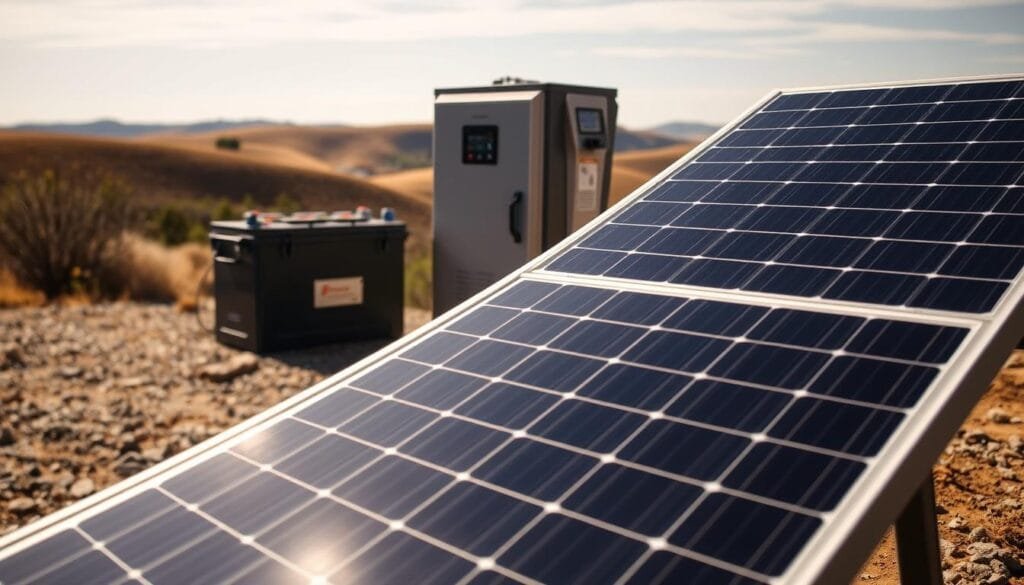
Solar devices use photovoltaic cells to turn sunlight into electricity. This technology has made it easier for people to be energy independent, no matter where they are.
How Solar Power Works in Portable Devices
The basic steps of solar technology are:
- Photovoltaic cells capture sunlight
- Solar panels convert light into electrical energy
- Integrated batteries store generated power
- Inverters transform stored energy into usable electricity
Benefits of Solar-Powered Equipment
Solar generators and chargers bring many benefits for off-grid living:
- Zero fuel costs
- Environmentally friendly energy production
- Quiet operation
- Minimal maintenance requirements
Current Technology Trends
| Technology Trend | Impact |
|---|---|
| Higher Efficiency Panels | 24.3% conversion rate |
| Battery Longevity | 3000-5000 recharge cycles |
| Compact Design | Increased portability |
Modern solar technologies continue pushing boundaries, making portable power solutions more accessible and efficient than ever before.
Best Solar-Powered Gadgets for Off-Grid Living
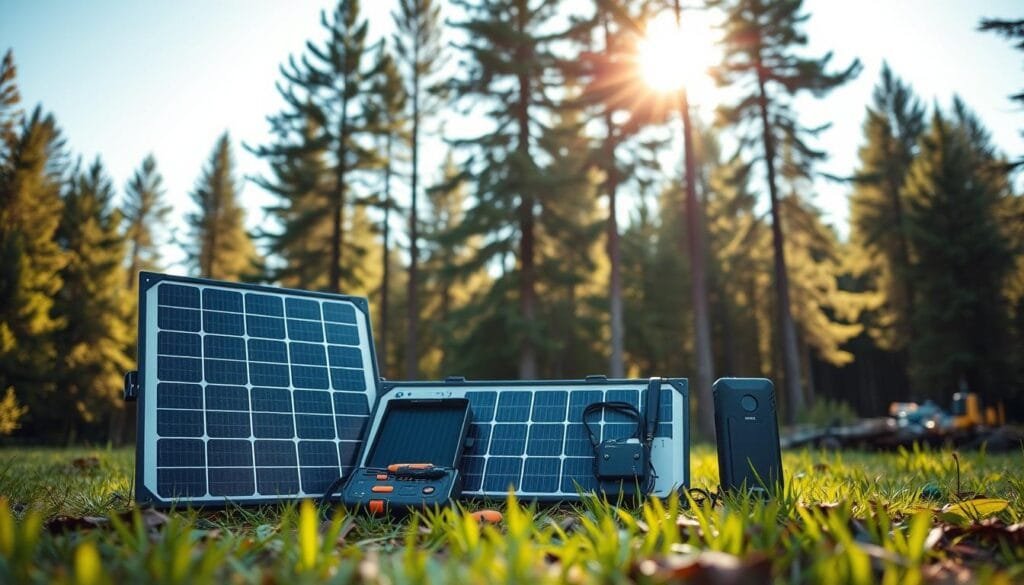
The world of eco-friendly gadgets for off-grid living has advanced rapidly in recent years. Now, people living in remote areas have access to top-notch solar technology, which makes their lives more comfortable and efficient than ever.
Solar tech has changed how we get power when we’re not plugged in. The latest solar gadgets are small but pack a big punch. They can generate a lot of energy.
- Portable solar chargers with 22% energy conversion rates
- Advanced solar power stations with capacities up to 6000Wh
- Multi-functional solar cooking equipment
- Durable water management systems
- High-efficiency refrigeration units
New solar tech has made these gadgets more powerful and easy to get. Bifacial solar panels catch sunlight from all sides, boosting energy output. Portable solar panels are tough and work well in harsh places, perfect for off-grid living.
Companies like Goal Zero have really advanced solar tech. They’ve tested their products in tough spots like Everest base camp. Their power stations are flexible and work for many off-grid needs, from camping to emergency readiness.
Today, solar technology isn’t just an alternative – it’s becoming the primary power solution for adventurers and sustainability-focused individuals.
These solar gadgets are also great value. They can save you about $500 a year on fuel costs. Plus, they offer sustainable, renewable energy that works in many places.
Portable Solar Power Stations and Generators
Portable power solutions have changed off-grid living. They offer reliable energy for adventurers and those preparing for emergencies. Solar generators are key for getting power when other sources fail, and they are vital for outdoor lovers and emergency kits.
Choosing the right portable power station is key. Each model has its own strengths for different off-grid needs.
| Power Station | Capacity | Weight | Best For |
|---|---|---|---|
| Jackery Explorer 1000 | 1,002 Wh | 22 lbs | All-round off-grid base power |
| Goal Zero Yeti 500 | 499 Wh | 16.1 lbs | Lightweight setups & fast recharge |
| EcoFlow Delta | 1,260 Wh | 30.9 lbs | High-output, power-hungry devices |
Jackery Explorer 1000 Portable Power Station
The Jackery Explorer 1000 is a top choice for solar generators. It has impressive specs:
- Capacity: 1,002 watt-hours
- Weight: 22 lbs
- Charging capabilities:
- Laptop charging: Up to 8 times
- Small refrigerator runtime: Over 15 hours
- Charging times:
- Car outlet: 11.5 hours
- Solar panels: 6.5 hours
- Wall outlet: 5.5 hours
Goal Zero Yeti 500
The Goal Zero Yeti 500 is a compact option for power needs:
- Capacity: 499 watt-hours
- Weight: 16.1 lbs
- Charging speed:
- AC outlet: Less than 90 minutes
- 200W solar panel: Around 3 hours
EcoFlow Delta Portable Power Station
EcoFlow Delta offers strong power for tough off-grid needs:
- Capacity: 1,260 watt-hours
- Weight: 30.9 lbs
- Total output: 1,800 watts
- Solar charging: 4 hours with four 100-watt panels
Choosing the right portable power solution depends on your specific energy needs, device requirements, and off-grid lifestyle.
Solar-Powered Lighting Solutions
Solar-powered lighting is a big step forward in sustainable tech for off-grid survival. These gadgets turn sunlight into light, solving power issues in remote places and outdoors.
Modern solar lights soak up sunlight during the day and save it for night. They’re great for camps, emergencies, and living far from cities. Their portability makes them easy to use anywhere.
- Solar lanterns with integrated batteries
- Motion-sensor security lights
- Decorative string lights for outdoor spaces
- Compact portable solar lights
When picking solar lights, look at these important factors:
| Feature | Importance | Performance Metric |
|---|---|---|
| Battery Capacity | High | 8-12 hours runtime |
| Brightness | Medium | 50-200 lumens |
| Durability | High | Waterproof, shockproof |
New solar lighting tech has intelligent charging and better energy storage. The BioLite SolarPanel 5+ even has a sundial for better solar use. This shows how far this field has come.
Buying solar lights helps the planet and gives you light when you need it. These gadgets reduce carbon emissions and work well in tough off-grid spots.
Advanced Solar Cooking Equipment
Renewable energy is changing how we do everyday tasks. Solar cooking is a big step forward for green living. Solar ovens cook food using sunlight, not fuel.
Today’s solar cooking gear is amazing. It lets us cook off the grid in a green way. These devices use sunlight to heat a special cooking area, which can reach 300°F (148°C).
Solar Ovens and Cookers Design
Solar cookers have different designs, each with its own benefits:
- Box Solar Ovens: Simple and affordable, priced from $10 to $50
- Panel Cookers: Light and easy to carry, costing $10 to $30
- Parabolic Cookers: More advanced, priced between $50 and $100
Temperature Control Features
Modern solar cookers have cool temperature control systems. They work best from 11 AM to 3 PM when it’s sunny. This way, food cooks gently, keeping nutrients and staying safe at about 180°F (82°C).
Cooking Capacity and Efficiency
Solar ovens are great for small to medium meals. They’re good for the planet, save money, and are perfect for off-grid living. They’re a clean way to cook, even in remote places.
Solar Water Pumping Systems
Solar water pumping systems are a big step forward in off-grid survival gear. They use solar energy to bring water to remote areas, changing how communities handle their water needs.
These systems have many benefits:
- Zero operational electricity costs
- Minimal maintenance requirements
- Environmentally friendly alternative energy sources
- Reliable water extraction from wells and streams
There are many types of solar water pumps. Submersible pumps work underwater, and surface pumps get water from outside. The technology has improved a lot, and some systems have great specs.
| Pump Feature | Performance Specification |
|---|---|
| Flow Rate | Up to 5 gallons per minute |
| Well Depth Capacity | Up to 100 feet |
| Solar Panel Voltage | 18V maximum power point |
| Battery Backup | 6-hour minimum operation |
When picking a solar water pump, consider the water source depth, flow rate, and sunlight. Brands like ROCKSOLAR and ECO-WORTHY offer kits with warranties of 1 to 2 years.
Choose these green technologies for better water access. They also cut down on environmental harm and costs.
Pair a solar pump with smart water capture — see our essential tips for rainwater collection to make the most of every drop.
Solar-Powered Refrigeration Units
Sustainable technology has changed how we keep food fresh for off-grid living. Solar-powered refrigeration units are a great solution for keeping food cold in remote places. They also work well for camping and alternative homes.
Eco-friendly gadgets like solar refrigerators are perfect for independent people. They use solar energy to keep food at the right temperature, helping it stay fresh for longer.
Energy Consumption Ratings
Choosing a solar refrigerator means looking at energy efficiency. The best ones show great results:
- Voltage options: 12 or 24 volts
- Polyurethane insulation thickness: 4.5 inches
- Capacity range: 2 to 21 cubic feet
Storage Capacity Options
Solar refrigerators come in different sizes to fit various needs:
| Cubic Feet | Average Price |
|---|---|
| 8 cubic feet | $1,120.00 |
| 10 cubic feet | $1,608.33 |
| 15 cubic feet | $1,475.00 |
| 16 cubic feet | $2,195.00 |
| 21 cubic feet | $1,995.00 |
Temperature Control Features
Modern solar refrigerators have advanced temperature control, and smart cooling systems help keep food at the right temperature. Some models get a perfect 5 out of 5 rating.
Pro tip: Consistent sunlight is key to optimal solar refrigerator performance.
Solar-powered refrigeration units cost between $495 and $2,250, making them a good choice for many off-grid living situations.
Portable Solar Chargers and Power Banks
Renewable energy has changed how we power our devices. Solar chargers are now key for those living off the grid. They turn sunlight into electricity, keeping your gadgets charged anywhere.
Today’s solar chargers are amazing for outdoor fun and being ready for emergencies. Look for these important features:
- Battery capacity
- Charging speed
- Durability
- Multiple device charging
Top solar chargers really deliver. The Keutek Portable Solar Power Bank is a standout:
| Feature | Specification |
|---|---|
| Battery Capacity | 26,800mAh |
| Charging Speed | 50% faster than standard chargers |
| Power Duration | 8 days on single charge |
| Customer Rating | 4.9/5 stars |
When picking solar chargers, search for advanced features. Look for charge controllers, weatherproof designs, and many output ports. Brands like BioLite and Goal Zero have cool designs that help catch more sun.
Solar-powered power banks are great for many uses. They charge many devices at once. This makes them perfect for outdoor fun, being ready for emergencies, and using green energy.
Solar Home Security Systems
Off-grid living needs smart security solutions that are both green and strong. Solar-powered home security systems are a big leap forward. They are perfect for those who want reliable protection without harming the planet.
1 in 6 US adults had their packages stolen in 2024. Solar-powered security systems are a smart, green way to keep your stuff safe. They use the sun’s power to watch over your home all day and night.
Motion Sensors and Cameras
Modern solar security cameras have amazing features that make old systems look bad:
- 2K resolution for clear pictures
- Wide-angle views (110-155 degrees)
- Color and infrared night vision
- AI to spot threats
Battery Backup Systems
Thanks to new battery technology, solar security systems are reliable. LiFePO4 Lithium Iron Phosphate batteries store a lot of power, so your home stays safe even when it’s dark or cloudy.
Remote Monitoring Capabilities
Today’s solar security systems let you watch over your home from anywhere. You can:
- See live video from your phone
- Get alerts when something moves
- Connect with other smart home devices
- Save footage without paying a monthly fee
Solar security is the future of keeping your home safe. It’s green, smart, and always on the lookout.
Solar-Powered Communication Devices
Staying connected in remote places is key for those who love off-grid survival gear. Solar-powered devices have changed how we keep in touch in the wilderness. They offer a way to communicate when regular networks don’t work.
Some important devices for off-grid areas include:
- Satellite phones that can charge with sunlight
- Emergency radios that crank and have solar backup
- Solar-powered Wi-Fi hotspots
- Portable solar communication repeaters
Using alternative energy has made communication tech better. It lets adventurers and emergency teams stay in touch, even in tough spots. Today’s solar devices have cool features:
| Device Type | Power Output | Battery Life |
|---|---|---|
| Solar Satellite Phone | 5-10W | 8-12 hours |
| Emergency Solar Radio | 2-5W | 15-20 hours |
| Solar Wi-Fi Hotspot | 3-7W | 6-10 hours |
When picking solar communication gear, consider durability, transmission range, and energy efficiency. Choose devices that are tough, have many charging options, and work well with solar systems.
Getting good solar-powered communication gear means you can stay in touch during adventures, emergencies, or when living off-grid for a long time.
Maintenance and Care of Solar Equipment
Keeping solar equipment in good shape is key to its long-term performance. For those who live green, it’s important to take care of solar gear. This ensures it works well and reliably.
Cleaning and Storage Tips
Regular cleaning and smart storage are part of solar equipment care. Experts say to check your devices every month:
- Clean solar panels monthly to remove dirt and debris
- Use soft cloths and mild cleaning solutions
- Inspect mounting hardware for secure fastening
- Store equipment in cool, dry locations
Performance Optimization Strategies
To get the most out of your solar setup, try these tips:
- Position solar panels at optimal angles (30-50 degrees)
- Use monitoring systems to track energy production
- Regularly check battery charge levels
| Maintenance Task | Frequency | Purpose |
|---|---|---|
| Panel Cleaning | Monthly | Remove dirt and maximize efficiency |
| Battery Capacity Test | Annually | Ensure consistent power delivery |
| Wiring Inspection | Every 6 months | Check for wear and corrosion |
Troubleshooting Common Issues
Solar gear can run into issues. Proactive maintenance can help avoid most problems:
- Check battery connections for corrosion
- Monitor inverter performance
- Verify roof mounting integrity
- Test battery charge retention
Regular maintenance can extend solar equipment lifespan by up to 25% and maintain peak performance in off-grid settings.
Cost Analysis and ROI of Solar Gadgets
Investing in renewable energy is a big step. Solar gadgets are a smart choice for those living off the grid. They offer long-term savings.
The cost of solar gadgets might seem high at first. But, the benefits are worth it. Here are some key points to consider:
- Average solar system cost after federal tax credit: $20,552
- Typical savings range over system lifetime: $31,000 to $100,000
- Average annual electricity savings: $2,100
- Federal solar tax credit: 30% of total system costs
Several factors come into play when evaluating the return on investment (ROI). Solar investments usually pay off in 5-10 years, and most homeowners see big savings in about 7.1 years.
| State | 25-Year Savings | Payback Period |
|---|---|---|
| California | $104,498 | 5.5 years |
| New York | $77,844 | 6.8 years |
| Arizona | $43,550 | 6.6 years |
Several things affect how much you save with solar gadgets. These include local electricity rates, sunlight, system efficiency, and state incentives. Choosing the right equipment and understanding your energy use can help you save more.
Environmental Impact and Sustainability
Renewable energy is key to cutting global carbon emissions. Solar gadgets help us live greener by reducing our environmental impact. They let us play a big role in saving our planet.
Solar tech does more than just help us. It can cut a home’s carbon footprint by half. Solar systems bring many benefits to our planet:
- They cut down greenhouse gas emissions a lot.
- They reduce our need for fossil fuels.
- They make clean energy without harming the environment.
- They help keep our planet healthy for the long term.
Using solar gadgets helps us live more sustainably. Homes with solar and smart tech can use 20% less energy. This helps not just our homes but also the planet.
Smart energy systems can cut energy use by 10% to 30%. Homes with solar panels and smart tech can even increase in value by 4% to 6%. This shows how solar energy is good for both our wallets and the planet.
Solar technology is more than just energy. It’s a promise to our planet and a future that’s sustainable.
Using solar tech right means thinking about its whole life cycle. From making it to recycling it at the end. As tech gets better, solar energy’s benefits will grow. It will help us fight climate change more effectively.
Conclusion
The world of off-grid living is changing fast with new tech. Solar gadgets are leading the way for those wanting to live green. They offer power in places far from the grid.
Looking into off-grid living in 2026? You’ll find many solar options. Companies like Jackery, Rocksolar, and Goal Zero are making big strides. They help cut energy costs by up to 70% and are good for the planet.
Solar gadgets are more than just tech. They show we care about using energy wisely and protecting our planet. By choosing these gadgets, we can live in green and high-tech ways.
Thanks to solar tech, the future of off-grid living looks bright. It provides energy without interruption, lowers carbon emissions, and boosts freedom. Choosing solar gadgets is a smart move towards a greener, more independent life.
Frequently Asked Questions
What are the main advantages of solar-powered gadgets for off-grid living?
How do solar-powered devices work in off-grid settings?
Are solar-powered gadgets reliable enough for full-time off-grid living?
How much do solar-powered gadgets for off-grid living cost?
Frequently Asked Questions
What are the main advantages of solar-powered gadgets for off-grid living?
Solar gadgets give you energy independence, cut your running costs over time, and reduce your environmental impact. Because they make their own power from sunlight, they work in remote spots with no grid connection — exactly what off-grid living needs.
How do solar-powered devices work in off-grid settings?
Photovoltaic panels capture sunlight and convert it into electricity, which is stored in built-in batteries. That stored energy is then available on demand — even at night or on cloudy days. Modern panels harvest light in less-than-ideal conditions far better than older models.
Are solar-powered gadgets reliable enough for full-time off-grid living?
Yes. Brands like Jackery, Goal Zero, and EcoFlow build rugged portable power stations with large batteries and multiple charging options designed for daily, full-time use. The key is sizing your system correctly for your devices and your location’s sunlight.
How much do solar-powered gadgets for off-grid living cost?
Prices range from around $50 for a small solar charger to over $1,500 for a large power station, with solar refrigerators running higher. Most owners recoup the cost within 2–5 years through fuel and electricity savings and greater independence.
Can solar-powered devices work in areas with limited sunlight?
Yes. High-efficiency panels still generate power in cloudy or partially shaded conditions, and built-in batteries let you store energy on sunny days to use when light is poor. For consistently low-sun regions, choose a higher-capacity battery and more panel wattage.
What maintenance do solar-powered gadgets require?
Very little. Clean the panels monthly, check battery connections for corrosion, and store devices somewhere cool and dry when not in use. With basic care, most quality solar gadgets last 5–10 years.
Which solar-powered gadgets are essential for off-grid living?
Start with a portable power station, a solar charger or power bank, and solar lighting. From there, add cooking, refrigeration, water-pumping, security, and communication gear based on your lifestyle and location.
How do I determine the right solar power capacity for my needs?
List every device you plan to run and its wattage, then add up your daily watt-hours. Choose a power station and panel setup that comfortably exceeds that number, and leave headroom for growth and unexpected demand.